
CCTV in operation. That is a strange phrase to me. In operation implies the unstoppable force of powerful machinery; the authority of a business-like procedure; an incision made to investigate the corporeal by the rational surgeon. Unemotional, every one. Perhaps the phrase suits the icon of the blanked out, indiscriminate, unfeeling, unblinking camera eye, because the phrase in operation appears in these signs routinely.

With this notice, it's as if the installer thinks, 'in operation' is not powerful enough. Any passer-by is warned - if they'd like to creep back to that site to DUMP RUBBISH at 3am, then unrelenting 24hr recording will be ongoing at that time too.

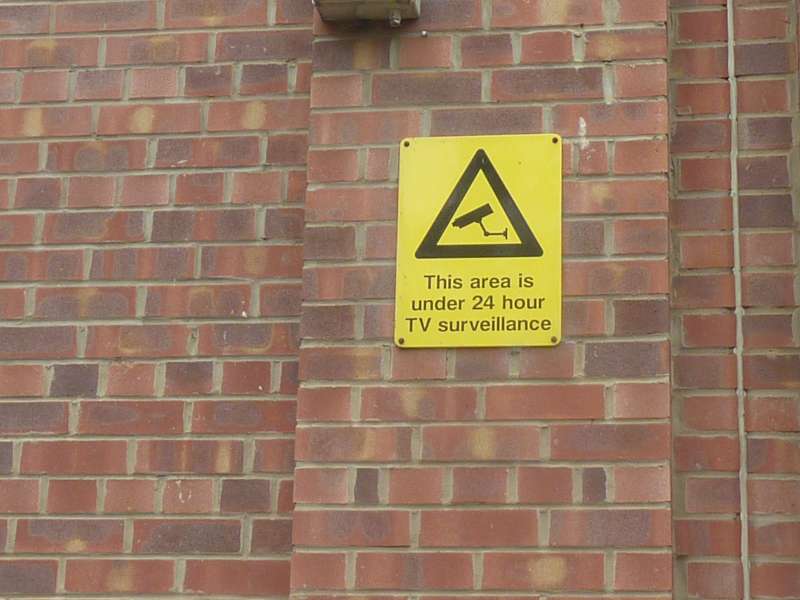
Surveillance. This word is interesting, because it all depends on your point of view, doesn't it? I might 'keep an eye' on a family member's comings and goings, and I might consider that my dutiful role of care. But if my family member doesn't welcome such scrutiny, they might call it surveillance.
When used on a sign with CCTV, perhaps this word, surveillance, already has within it the possibility that the watchfulness is similarly unwelcome. Perhaps the installer of the sign would like me, passer-by, to construct for myself the identity that 'the sign obviously doesn't reference me, because I'm not doing anything that needs watching'. Perhaps the installer would like only would-be criminals to be alarmed! The word seems generally to fit with the popular theory that crime caught on CCTV is easier to detect, therefore would-be criminals are less likely to commit crimes.


I pass these signs routinely, and I look back with my own jaundiced eye.
Surveillance camera systems are familiar to me in public places. Installed by private and public bodies and by charitable, community or voluntary bodies that span both private and public interests, they're in shopping centres, sports venues, and schools; they monitor transport, keep an eye on places where medicines are stored, and point along streets to vehicles and people.
They create debates about civil liberties, the Big Brother state, an Orwellian future. We can argue whether there is cause-and-effect with crime detection and CCTV.
But, except for the last sign there, none of these signs - cautioning the use of CCTV - in themselves fully comply with the Data Protection Act (1988).
The Home Office Surveillance Camera Code of Practice (June 2013) reminds the installers that they are under a legal obligation to alert the public through signage to the use of cameras, to publish a contact for who's watching, and to explain why the system is needed.
These notices should tell me the identity of the person or organisation responsible for the camera, their contact details, and tell me, passer by, why the camera is there - what, in the view of the installer, is the purpose of the camera system? What's more, The Data Protection Act requires most data controllers, whether they are an organisation or an individual, to register with the Information Commissioner's Office that they are monitoring and processing visual information by camera.
So I have recourse to law if I feel these requirements are breached.
But to whom would I address my questions on the ground, in this physically monitored space? Someone who never put the sign there but who perhaps feels protected by the security it promise? Would they look back at me, and wonder what could be my motive for undermining what must surely be a public good - the CCTV at the school gates, at the road junction, the back lane, the quiet corners?
These signs indeed send out messages about the way we live. They say, at this point, on the behalf of the hidden watchers, surveillance is necessary: you live amongst criminals, opportunists with bad intent, addicts, people who need watching. These signs say, You down there, who might be up to No Good. We're watching you, just to make sure. Perhaps they even construct part of me as a would-be criminal. I start to imagine myself creeping the back lanes with my bag of rubbish.
But then, I wonder if the camera is connected at all? Do I stare at a dummy camera, sited blind and unmoving on the wall? Who knows? We only have the sign to say.


